
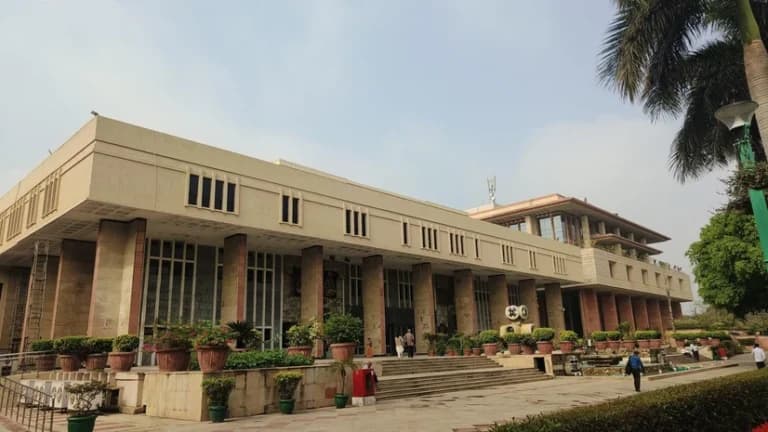
In a packed courtroom on Friday, the Delhi High Court delivered a firm and rather emotional judgment in a nearly three-decade-old murder case involving two Army personnel posted at a private residence in Kirti Nagar. The Bench of Justice Subramonium Prasad and Justice Vimal Kumar Yadav refused to interfere with the conviction of Ram Singar Singh, who was found guilty of murdering fellow soldier Lance Naik Kanhaiya Lal during a night shift in June 1996. The court, speaking with noticeable candour, highlighted how simmering feelings of revenge can push even disciplined individuals into catastrophic decisions.
Background
According to the case record, both men were among four security personnel deployed at a house owned by Lalit Makan in Kirti Nagar. A day before the incident, Singh was allegedly slapped and humiliated by the deceased during an argument over cleaning duties. The judges noted that such incidents-however small-can leave “deep psychological bruises,” especially in high-stress postings.
Read also: Supreme Court Flags Serious Procedural Flaws, Sends Bihar Murder Case Back for Fresh Section 313
Things escalated early on June 28, 1996, when a gunshot rang through the room where the personnel rested between shifts. Two colleagues-Constable Devinder Pal Singh and Head Constable Rajesh Singh Chauhan-testified that they woke to the sound, switched on the light, and found Kanhaiya Lal bleeding heavily on his cot while the accused stood nearby holding his service rifle. The defence attempted to distance Singh from the firing, arguing that darkness, conflicting witness statements, and lack of fingerprints created serious doubt. But the court, after closely revisiting testimonies, was not convinced.
Court’s Observations
The Bench pointed out that while one witness altered parts of his testimony years later, “courts must separate the chaff from the grain” instead of discarding the entire testimony. The judges relied on consistent core facts supported by both eyewitnesses: the accused had left his sentry point, entered the room, and was seen holding the rifle immediately after shots were fired.
Read also: Supreme Court Restores Seniority Rights of PSEB Employee After Nearly Five-Decade Legal Battle
The Bench also highlighted the accused’s alleged threat to shoot a colleague who caught hold of the rifle. “Such utterances,” the court observed, “operate as an extra-judicial confession made in the heat of the moment.”
Photographs, seized cartridges, and the forensic report tied the bullets to the rifle issued to Singh. Medical evidence made it clear that two shots were fired from a close range at the jaw and chest-areas that left “no scope for accidental firing.”
One comment from Justice Yadav stood out: “Revenge operates from the most primitive parts of the human mind. When unchecked, it blinds judgment and overwhelms training.” This observation flowed naturally from the court’s lengthy discussion on motive and human behaviour.
Decision
After reviewing all material afresh, the court concluded that the prosecution had proved its case beyond doubt. The judges upheld Singh’s conviction for murder under Section 302 IPC and for illegal use of a firearm under Section 27 of the Arms Act. His life sentence, imposed by the trial court in 2003, remains unchanged.
Read also: Supreme Court Clarifies GST Exemption on Hostels, Says Sub-Leasing for Residential Use Still Counts
The appeal was dismissed with a brief closing remark from the Bench: “Every man is presumed to intend the natural consequences of his act. Here, the act is clear and the consequence irreversible.”
With this, the matter-frozen in time for nearly 30 years-finally reached closure in the courtroom.
Case Title: Ram Singar Singh vs. State
Case Number: CRL.A. 173/2003
Case Type: Criminal Appeal (Murder – Section 302 IPC & Section 27 Arms Act)
Decision Date: 28 November 2025